Case 61: Detection of Abdominal Aortic Aneurysm Using Point-of-Care Ultrasound

Sanjana Sanghani, Gerald Tolbert, Rachna Subramony

A 52-year-old male with a past medical history significant for hypertension and hyperlipidemia presented to the Emergency Department with two days of intermittent chest discomfort accompanied by mild epigastric pain. The pain was non-radiating, episodic, and not associated with nausea, vomiting, diaphoresis, syncope, or exertion. He denied recent trauma, heavy lifting, or prior similar episodes. There was no known personal history of vascular disease, tobacco use, or family history of aneurysmal disease.

An electrocardiogram demonstrated normal sinus rhythm without ischemic changes.

Vital Signs: BP 148/92 mmHg | HR 78 | T 98.1°F | RR 18 | SpO2 98% on room air

The patient appeared comfortable and in no acute distress. Cardiopulmonary examination was unremarkable, with normal heart sounds and clear lung fields. Abdominal examination revealed mild tenderness to deep palpation in the epigastric region without guarding, rebound tenderness, or palpable pulsatile mass. No abdominal bruits were auscultated. Peripheral pulses were symmetric and intact in all extremities, and there were no focal neurologic deficits.

Given the patient’s nonspecific symptoms, elevated blood pressure, and underlying cardiovascular risk factors, a point-of-care abdominal aortic ultrasound was performed to evaluate for occult aortic pathology. Bedside ultrasound examination of the abdominal aorta was performed using a low-frequency (2–5 MHz) curvilinear transducer. The aorta was evaluated in both transverse and longitudinal planes from the epigastrium to the aortic bifurcation, with measurements obtained from outer wall to outer wall, as recommended by established ultrasound guidelines.

Figure 1: Focal aneurysmal dilation of the abdominal aorta, with maximal diameter exceeding 3.0 cm, consistent with an ectatic aorta/ abdominal aortic aneurysm.

No free intraperitoneal fluid was identified on the focused abdominal assessment.

Discussion

Abdominal aortic aneurysm (AAA) is defined as a focal dilation of the abdominal aorta measuring ≥3.0 cm in maximal diameter or greater than 50% of the expected normal diameter. AAAs are most commonly infrarenal and fusiform in morphology, though saccular aneurysms—characterized by asymmetric outpouching—are less common and may be associated with higher rupture risk depending on etiology and size.

Point-of-care ultrasound (POCUS) is a highly effective, rapid, and noninvasive modality for the detection of AAA in the emergency department. Numerous studies have demonstrated that emergency physician–performed ultrasound has a sensitivity approaching 99% and specificity of approximately 98% for identifying AAA. This high diagnostic accuracy makes POCUS a first-line imaging tool, particularly in patients with atypical presentations, vague abdominal or chest symptoms, or when rapid risk stratification is required.

Importantly, AAA can present with nonspecific symptoms such as epigastric pain, back pain, or chest discomfort, and classic findings, such as hypotension or a palpable pulsatile mass, are often absent. Early identification using bedside ultrasound allows for prompt vascular surgery consultation and expedited confirmatory imaging, typically with CT angiography in hemodynamically stable patients.

Ultrasound evaluation focuses on identifying aneurysmal dilation, assessing morphology, and measuring maximal diameter. The presence of mural thrombus, commonly seen within AAAs, does not by itself indicate rupture but may be associated with embolic complications. While POCUS excels at identifying aneurysm presence and size, it has limitations: it cannot reliably assess suprarenal extension, branch vessel involvement, or small contained ruptures. Additionally, ultrasound is not sufficient to exclude acute aortic dissection or retroperitoneal hemorrhage, for which CT angiography remains the gold standard.

In this case, although the patient was hemodynamically stable and lacked classic symptoms of rupture, bedside ultrasound facilitated early recognition of significant aortic pathology that may have otherwise been delayed due to the nonspecific nature of his presentation.

Conclusion

This case underscores the critical role of point-of-care ultrasound in the emergency evaluation of patients with vague chest or abdominal symptoms and cardiovascular risk factors. Rapid bedside identification of an abdominal aortic aneurysm enabled early diagnosis, appropriate risk stratification, and timely specialty referral. POCUS remains an indispensable diagnostic adjunct in emergency medicine, particularly for the detection of life-threatening aortic pathology.

References

  1. Tayal VS, Graf CD, Gibbs MA. Prospective Study of Accuracy and Outcome of Emergency Ultrasound for Abdominal Aortic Aneurysm. Acad Emerg Med. 2003;10(8):867–871. doi:10.1197/aemj.10.8.867
  2. Society for Vascular Surgery. Practice Guidelines for the Management of Abdominal Aortic Aneurysms. J Vasc Surg. 2018;67(1):2–77. doi:10.1016/j.jvs.2017.10.044
  3. Jang T, Docherty G, Aubin C, et al. Point-of-Care Ultrasound for the Detection of Abdominal Aortic Aneurysm in the Emergency Department. Ann Emerg Med. 2020;75(4):534–542. doi:10.1016/j.annemergmed.2019.09.002
  4. Chaikof EL, Dalman RL, Eskandari MK, et al. The Society for Vascular Surgery Practice Guidelines on the Care of Patients with an Abdominal Aortic Aneurysm. J Vasc Surg. 2018;67(1S):2S–77S.e2. doi:10.1016/j.jvs.2017.10.044
Case 41: Abdominal Aortic Aneurysm

Skyler Sloane, Benjamin Supat, Colleen Campbell

An 83-year-old man presented to the emergency department with a chief complaint of acute onset lower abdominal pain radiating to the right groin. The patient reported a history of hypertension, coronary artery disease, and nephrolithiasis. 

Vitals: BP 71/51 | Pulse 84 | Temp 98.0 °F (36.6 °C) | Resp 20 | SpO2 99% on RA 

On physical exam, the patient appeared to be in obvious discomfort. There was diffuse abdominal tenderness though no rebound or guarding was observed.

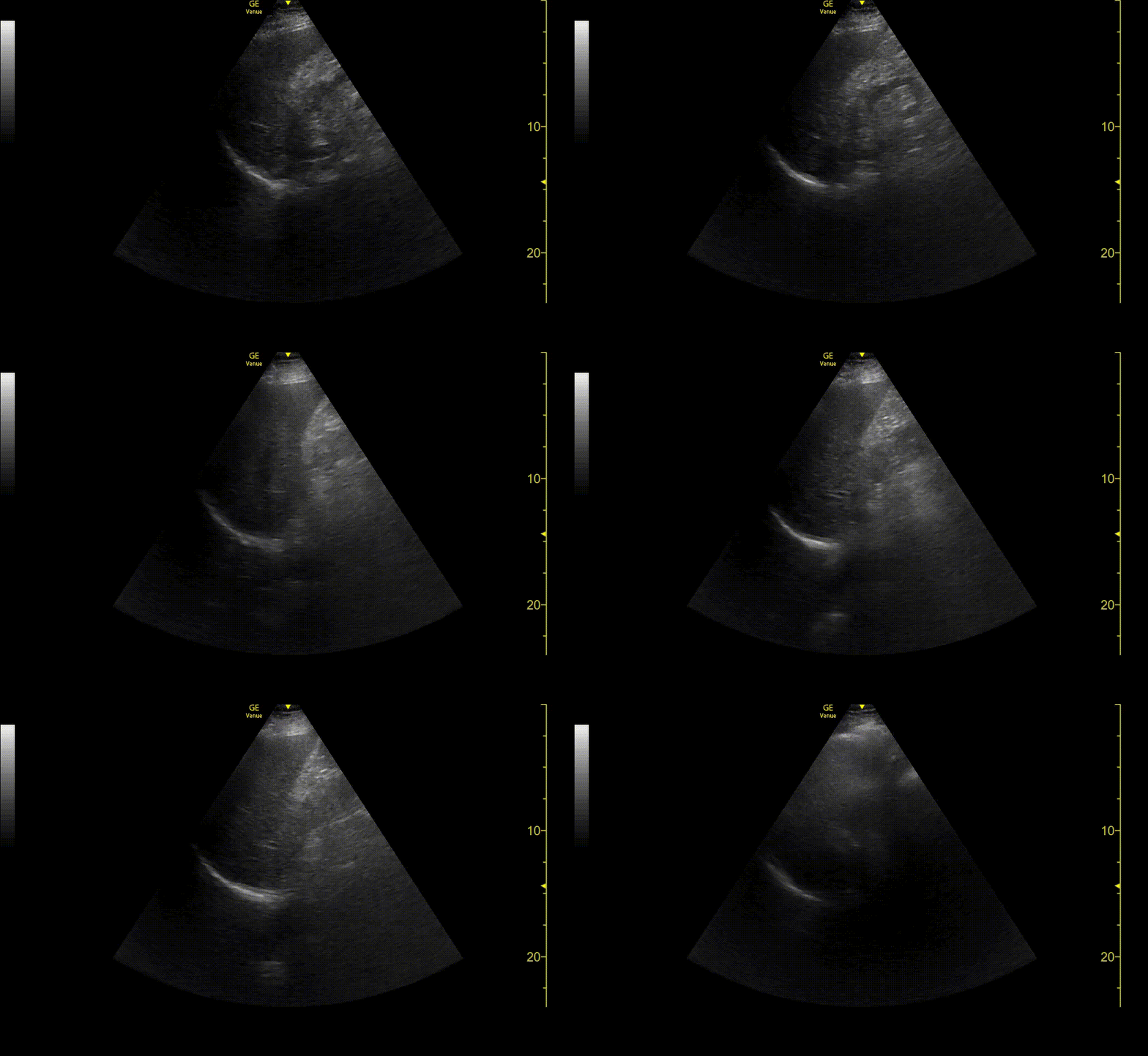
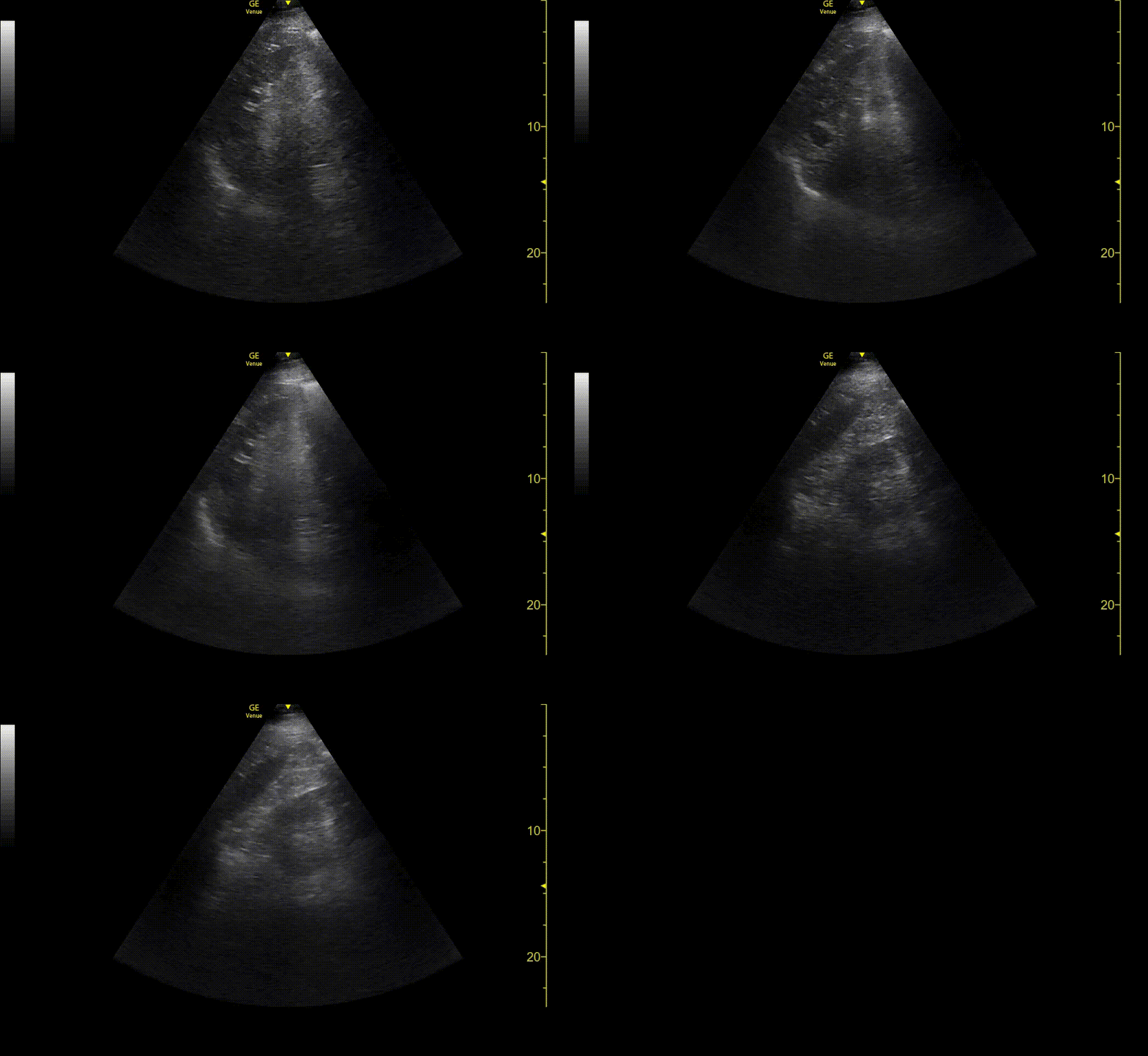
A bedside FAST exam was performed. What do you see? 

Figures 1-3: This 3-view FAST exam was negative for intra-abdominal free fluid.

Next, we performed an ultrasound of the aorta.

Figure 4: Transverse aorta view. Here we can see a fusiform aneurysm. The hyperechoic vessel wall contains a less dense ring of clot surrounding the anechoic blood in the vessel.

Figure 5: Labeled image showing intramural thrombus.

The patient was given a 1L fluid bolus, 2 ultrasound-guided peripheral 14g IVs, and 2 units of emergency-release blood. The patient also got a CT angiogram which showed a large ruptured fusiform infrarenal abdominal aortic aneurysm measuring 9.2 cm by 6.0 cm with a large hematoma in the right flank and iliac fossa, which explained the patient’s symptom of flank pain. Diffuse moderate atherosclerotic vessel wall changes were also present. The patient underwent emergent endovascular aneurysm repair.

Discussion: 

An abdominal aortic aneurysm (AAA) is defined by the parameter of aortic dilation of 3 cm or greater, measured outer wall to outer wall (1). This risk of developing a AAA increases with age and is more common in males than in females. Primary relationship to a family member who has had an AAA, hypertension, and coronary artery disease are predisposing factors. Smoking and poor lifestyle are also common risk factors (2). 

There are three types of AAAs: fusiform aneurysms, saccular aneurysms, and mycotic aneurysms. Fusiform aneurysms comprise 94% of aneurysms, and they present as bulging or ballooning on all sides of the aorta. Saccular aneurysms are less common and become symptomatic at smaller sizes (on average of 5.5 cm) and present as an outpouching on one side of the aorta. Saccular aneurysms can result from a tear on the tunica media of the aortic wall, due to injury or ulceration. Mycotic aneurysms are formed due to an infection of the vessel wall that can be bacterial, viral, or fungal in nature. They can occur as a complication of endocarditis and have an increased risk of rupture. AAAs are most commonly infrarenal (80%), but some may be pararenal (3,4).

Most patients with AAAs are asymptomatic, and diagnosis is often incidental as a result of imaging with MRI, CT, or ultrasonography. AAAs can present with life-threatening complications such as thrombosis, embolization, and rupture (3). The risk of rupture increases with the size of the aneurysm. A ruptured AAA is a catastrophic medical emergency, and left untreated the mortality approaches 100%. 50% of patients die prior to hospital arrival, and another 25-50% die during surgery.  Most AAAs rupture in the retroperitoneal cavity, creating symptoms of pain, lightheadedness, and a pulsing sensation in the abdomen. Notably, up to 50% of patients with AAAs have aneurysm rupture as their primary presentation of having a AAA, and only some patients are diagnosed prior to a catastrophic event and thus have preventative measures taken (5). 

Due to the emergent need to address potential AAA and AAA ruptures, rapid diagnosis in an emergency setting is necessary. Aortic ultrasound is the primary diagnostic method for diagnosing AAAs or ruptured AAAs in an emergency setting (6). Non-radiologist-performed ultrasound for AAA is estimated to have a sensitivity of 0.975 [95% confidence interval (CI), 0.942-0.992] for AAA detection and a specificity of 0.989 (95% CI, 0.979-0.995), making it an effective diagnostic tool (7). Computed tomography angiogram is also commonly used for diagnosis and surgical planning of AAAs. However, CT is not always feasible in unstable patients (8). 

In this case, point-of-care ultrasound was a vital component in diagnosing this patient. Given a patient presentation concerning for AAA, ultrasound is a rapid and effective method to reach an early diagnosis and expedite treatment. 

References

  1. Hirsch AT, Haskal ZJ, Hertzer NR, et al. ACC/AHA 2005 Circulation. 2006; 113: e463-e654. doi:10.1161/CIRCULATIONAHA.106.174526
  2. Altobelli E, Rapacchietta L, Profeta VF, Fagnano R. Risk Factors for Abdominal Aortic Aneurysm in Population-Based Studies: A Systematic Review and Meta-Analysis. Int J Environ Res Public Health. 2018 Dec 10;15(12):2805. doi: 10.3390/ijerph15122805. PMID: 30544688; PMCID: PMC6313801.
  3. Farber, M. A.; Parodi, F. E. Abdominal Aortic Aneurysms (AAA), 2023, 2023. https://www.merckmanuals.com/professional/cardiovascular-disorders/diseases-of-the-aorta-and-its-branches/abdominal-aortic-aneurysms-aaa.
  4. Aggarwal S, Qamar A, Sharma V, Sharma A. Abdominal aortic aneurysm: A comprehensive review. Exp Clin Cardiol. 2011 Spring;16(1):11-5. PMID: 21523201; PMCID: PMC3076160.
  5. Jeanmonod D, Yelamanchili VS, Jeanmonod R. Abdominal Aortic Aneurysm Rupture. [Updated 2023 Aug 8]. In: StatPearls [Internet]. Treasure Island (FL): StatPearls Publishing; 2024 Jan-. Available from: https://www.ncbi.nlm.nih.gov/books/NBK459176/
  6. Abdominal aortic aneurysm: diagnosis and management. London: National Institute for Health and Care Excellence (NICE); 2020 Mar 19. (NICE Guideline, No. 156.) Available from: https://www.ncbi.nlm.nih.gov/books/NBK556921/
  7. Concannon E, McHugh S, Healy DA, Kavanagh E, Burke P, Clarke Moloney M, Walsh SR. Diagnostic accuracy of non-radiologist performed ultrasound for abdominal aortic aneurysm: systematic review and meta-analysis. Int J Clin Pract. 2014 Sep;68(9):1122-9. doi: 10.1111/ijcp.12453. Epub 2014 May 18. PMID: 24837590.
  8. Moxon JV, Parr A, Emeto TI, Walker P, Norman PE, Golledge J. Diagnosis and monitoring of abdominal aortic aneurysm: current status and future prospects. Curr Probl Cardiol. 2010 Oct;35(10):512-48. doi: 10.1016/j.cpcardiol.2010.08.004. PMID: 20932435; PMCID: PMC3014318.
Translate »